Monday, May 9, 2011

Cowboys in the news, 1882

Cowboys of Arizona, W. W. Rogers, 1882
According to the newspapers, cowboy-related trouble in Arizona and New Mexico got so bad, no less than an American president saw fit to speak out against it. Shortly after taking office in 1881, Chester Arthur had this to say:

A band of desperadoes known as “cowboys” from ninety to 100 men, have been engaged for months in committing acts of lawlessness and brutality, which the local authorities have been unable to suppress.

A correspondent’s write-up for the Cleveland Herald, later published in the Chicago Daily Tribune, January 5, 1882, clarifies for readers that there are two kinds of “cowboy.” One is a cattle herder, and there are “several thousand” of them.

The ideal cowboy has long hair, big boots, leather pants, buckskin shirt, and the broad white hat, with spurs as big as saucers.

These cowboys pose no problem until they get paid, when they head for town where “there is no limit to their outrageous conduct.”

They get drunk, gamble, fight, and shoot recklessly at friend or foe. A long plug of black tobacco, a couple of revolvers, and a heavy knife are sure accompaniments of a cowboy.

Killing another man is a badge of honor, “so that friendship or kindred ties are no barriers to the cowardly bullet.” If they don’t like a man, they may shoot a cigar out of his mouth. A stovepipe hat is sure to attract gunfire. Shooting up a town, they are said to have “murdered old men, babies, and women.”

Saturday, May 7, 2011

More international crime films

Here's another batch of films made outside Hollywood for folks who like stories about crime and criminals. Two are from France, one from England, and one from Belgium.

Tell No One (2006). A suspense thriller from France that draws on several classics of film noir while immersing the viewer in a creepily entertaining mystery that involves, among many things, a wife who may or may not be dead.

Eight years after the unsolved murder of a man's wife, he begins to receive mysterious email messages that lead him to believe she is still alive. When more long-dead bodies show up, the case is reopened and he suddenly becomes a suspect. Despite his innocence, he has reason to flee, with the cops in hot pursuit.

This tightly plotted crime film from director Guillaume Canet has great performances by François Cluzet and Kristin Scott Thomas. Unfolding breathlessly, it takes one unexpected turn after another, and the surprises don't stop until the end. Based on a bestseller by American writer Harlan Coben. 

London to Brighton (2000). This 85-minute thriller from director Paul Andrew Williams ramps up the tension from the first frame and doesn't take off the pressure for a second. Lorraine Stanley is terrific as a London prostitute who gets involved in some nasty business involving a runaway girl and a wealthy client. The following day, on the run to Brighton, with her pimp in hot pursuit, she tries to scrape up the cash to put the girl on a train to Devon.

Events, crammed into a single day, move much too fast finally for everybody, and two graves dug in the night are eventually occupied by the fated victims. Photography and editing are as fine as the performances of the cast, and the music track is especially haunting. Rarely has the Moonlight Sonata been used in a film to underscore such a darkly grim sense of foreboding. A real nail-biter. 

Read My Lips (2001). This one from French director Jacques Audiard is a head trip for any movie fan familiar with the conventions of office dramas and heist thrillers. It's full of surprising turns of plot and quirky details in the performances.

The two leads are the opposite of glamorous, and the chemistry between them is more about clever calculation and quick thinking than romantic attraction. Vincent Cassel plays an ex-con. Emmanuelle Devos is his hard-of-hearing accomplice.

While there are a couple of pretty nasty, brutish types capable of bloody punch-ups and clearly a willingness to kill, the violence in the film is muted. Instead, the film generates an old-fashioned kind of suspense that is more like Hitchcock -- almost elegant. I was continually being taken by surprise, then realizing that every unexpected turn of plot was also completely plausible, until I was so far sucked into the movie that plausibility didn't matter any more. 

The Memory of a Killer (2003). I'm not a huge fan of movies about hit men, but this one really grabbed and held me for its full two hours of nonstop action. A mix of thriller and police procedural, the film by Flemish director Erik Van Looy is clever, intelligent, and compelling as any Helen Mirren Prime Suspect.

There is wit and some broad humor, and it's also reminiscent of Hitchcock. The suspense sequences manage to keep our sympathies with both the young police investigators and the aging hit man they are pursuing - quite a trick. An added twist is that the hit man in question is suffering from the early stages of Alzheimer's, which alters his perception of what is going on around him as well as his memory.

The performances in the film are excellent, especially the amazing Jan Decleir as the killer. The cinematography and editing craftily reflect the complexity of the intertwining threads of plot. The soundtrack is drivingly strident (sounds like beating on trash cans) and creepy by turns. And BMW owners may wish that the film didn't make so much of a malicious practical joke directed as unerringly at them as the laser beam that shines from the hit man's gun.

All are available at netflix.

Coming up: Ralph Connor, The Sky Pilot (1899)

Friday, May 6, 2011

Photo-finish Friday: hello, goodbye


Here's a scene I expect to rarely see again. It's the homeward bound view of the western sky over the Santa Monica Freeway as I drive home from work. The spring semester is over and I'm off for the summer. In the fall, I expect to be living within walking distance of my job.

This pic was taken during the winter months when sundown came early. One good thing about it, I had the luck to have a reverse commute every day - the heaviest traffic usually going in the opposite direction. Either way, I don't expect to miss this part of the day's ritual.

Photo-finish Friday is the bright idea of Leah Utas over at The Goat's Lunch Pail. 

Thursday, May 5, 2011

Robert Alexander Wason, Friar Tuck (1912)

At 448 pages, this novel is as rambling as its full title: Friar Tuck, being the Chronicles of the Reverend John Carmichael, of Wyoming U.S.A., as set forth and embellished by his friend and admirer Happy Hawkins and here recorded by Robert Alexander Wason.

Happy Hawkins, the novel's first-person narrator, had already appeared as the title character of a previous novel, Happy Hawkins (1909). Like Wister’s Virginian, Happy doesn’t do much actual cowboying. Riding for the Diamond Dot, he and his pardner Spider Kelly may get sent out to round up cattle and ponies. But their efforts are typically sidetracked by more compelling distractions.

Religion on the range. The title character, Friar Tuck, is an itinerant preacher who wanders in and out of the action. Preachers in western novels are usually sanctimonious hypocrites or up to no good. Friar Tuck is neither. Committed to nonviolence and believing there’s goodness somewhere in even the meanest bastard, he has an amiable homegrown philosophy.

Not surprisingly, he’s out of place on the frontier, where religion of any kind finds few followers. He’s a voice crying in the wilderness, but he’s undaunted. One by one he manages to get sinners to give him a hearing, if not to repent.

He’s an advocate of what today would be called the social gospel. Life’s ills, he says, come from poverty and are the result of selfishness and greed. Despite the bruising conditions of life on the frontier, he won’t give up in his fight there for kindliness and decency.

Competing moralities. The novel is really about differing ideas of morality, one of them based on the Bible and advocating the universal brotherhood of men. The other is espoused by a lapsed church goer, Horace, who bases his values on the ancient Greek ideals of beauty, love, and harmony.

Both points of view merge into a Utopian vision by the novel’s end. In a long siege of the ranch belonging to a villainous cattleman, there are numerous casualties and a knife fight by candlelight in a dark tunnel. Then in an extended epilogue, the place is transformed into a kind of commune where bad men are redeemed and peace and industry prevail.

Wednesday, May 4, 2011

Sign of the times


This greeted me as I got off the Culver City bus at Santa Monica Blvd. and Supelveda Blvd. in West Los Angeles this evening. Same sign as the last time I posted it several weeks ago. Only the numbers have been changed.

Sort of like the rising flood tides along the Mississippi. Looking on the bright side, you can think of it this way. While the value of your car depreciates, the gas in the tank is appreciating.

And so life goes on . . .

Tuesday, May 3, 2011

Cowboys in the news, 1881

Tribune Building, Chicago
In the 1880s, cowboys on the frontier were regarded as untamed and more than a little dangerous. A correspondent for the Chicago Daily Tribune, writing from Tucson, Arizona, in 1881, gives an illuminating account of them.

He’s interviewed one cowboy, Jerry Benton, who’s been charged with murder and is on his way by train (and still armed) to face trial. Benton, who has killed men before, expects acquittal unless the jury has too much sympathy for the victim. “The law gets the best of us fellows,” he says, but he’ll stand trial “like a man.”

He has the “scarred face and desperate look so characteristic of the border-ruffian,” says the writer. Yet a man friendly to Benton calls him “a good fellow,” who behaves badly only when he’s “angry or under the influence of liquor.”

Photo by Erwin Smith, 1909
His “huge revolver” is a weapon he carries for self-defense. In Arizona, it’s explained, you can’t be “squeamish about shooting” if you expect to stay alive. And in these few paragraphs we get the picture of an affable man of both honor and violence. It’s the seed from which the myth of the cowboy would grow.

Cowboy characteristics. Benton, we learn, is one of a type. A cattle herder originating on the plains of Texas, the cowboy has now followed the expanding cattle industry into Arizona, New Mexico, and Colorado. An expert horseman, he can outride an Apache or a soldier. He may be American, Mexican, a half-breed, or Indian.

Besides a six-gun and belt, he carries a knife and repeating rifle and wears “a huge pair of spurs.” While “quick, wiry, and intrepid,” he is also “often generous and humane.” In temperament, “he is as uncivilized as a grizzly-bear and reckless as a savage.” For citizens and immigrants “he is fast becoming a terror” as he shoots up frontier towns. Stories abound of his “bloodthirsty career.”

St. Paul's Episcopal Church, Tombstone, Arizona; built 1882.
Practical jokes. There follow several stories of cowboy hi-jinks. According to report, a bunch of them cleared a restaurant by shooting at the plates in front of customers. Ministers were apparently the frequent butt of this kind of humor. In two accounts, cowboys enter churches and threaten to shoot the preacher.

Curly Bill (Brocius), who’d already shot a marshal in Tombstone, is given credit for terrorizing a congregation in Charleston, Arizona. While Curly Bill’s gang blocked the exits, the reverend was forced at gunpoint to do a dance. The writer wryly concludes: “The minister is now more strongly opposed to dancing than before.”

Other desperadoes who get a mention in the story include Johnny Behind the Deuce and Buckskin Sam. Of the latter, a story is reported that he celebrated the purchase of a new gun by firing it while riding through the streets of town. Later he turned himself in and “paid a handsome fine.”

Charleston, Arizona, 1885
Jack Slade is offered as a “specimen desperado,” and a story is told of his merciless killing of “an old enemy.” Tied to a post, the man was shot 23 times. Slade was said to be in no hurry, stopping to have a drink after every two shots. The final fatal round was discharged into the man’s mouth. Not finished, Slade cut off the dead man’s ears. (There’s yet another version of this story at legendsofamerica.com.)

Summing up, the writer portrays the majority of cowboys as a dangerous menace. They sell cattle to their “Greaser” friends in Mexico, then steal them back to sell again north of the border. As they invade towns and terrify citizens, they are no better than roaming bands of “bloodthirsty and daring” hooligans – Hell’s Angels on horseback. 

“A wild life on the plains,” the writer surmises, “is not generally adapted to bring out the better qualities of a man’s life.” There is talk of sending in Federal troops to “exterminate” this element. The writer concludes by pointing out that the spread of unchecked lawlessness has a way of discouraging agricultural and mining development – and we can’t have that.

Photo credits: Wikimedia Commons

Coming up: Robert Alexander Wason, Friar Tuck (1912)


Monday, May 2, 2011

Old West glossary, no. 11

Montana cowboys, c1910
Here’s another set of frontier terms garnered from early western writing. Definitions were discovered in various online dictionaries, as well as searches in Cassell’s Dictionary of Slang, Dictionary of the American West, The Cowboy Dictionary, The Barnhart Dictionary of Etymology, and The Shorter Oxford English Dictionary.

These are mostly from Robert Alexander Wason’s novel Friar Tuck (1912). Once again I struck out on a few. If anybody knows the Old West meaning of “Goog of Mayhan,” “only son burro,” “Stuttering Sam,” or “file the clutch,” leave a comment.

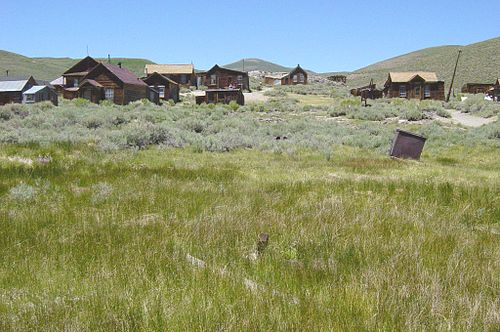
Bodie, California. Photo by Daniel Mayer
Bad man from Bodie = a mythical hell raiser from Bodie, California, a gold mining boomtown, 1878-1880. “Like ‘the bad man from Bodie,’ fear to him is an unknown quantity, and the greater the danger the more desperate he seems to become.” Chicago Daily Tribune, 30 July 1881. Read more here.

brace game = a gambling game in which there is concealed cheating. “When any professional hold-up men tried to ring in a brace game on us, he couldn’t see any joke in it.” Robert Alexander Wason, Friar Tuck.

Elijah in chariot of fire
chariots of fire = an emphatic expression; reference to usually airborne modes of transportation associated in the Old Testament with the divinity. “It looked like a put-up job, all right; an’ chariots of fire, but he was mad!” Robert Alexander Wason, Friar Tuck.

chirky = cheerful, happy. “Horace didn’t have any upliftin’ words to match the Friar’s; but he had some chirky little ways which were mighty comfortin’.” Robert Alexander Wason, Friar Tuck.

flam = to deceive, play a trick, hoodwink. “This here expedition was got up just on account o’ your nerves, an’ now that we’ve come to the most important point of all, why, you flam out an’ put all the risk on us.” Robert Alexander Wason, Friar Tuck.

flinders = fragments, small pieces, splinters. “It saved him from gettin’ his feelin’s kicked into flinders about him, an’ interferin’ with the view.” Robert Alexander Wason, Friar Tuck.

gazabo = guy, fellow; an awkward, strange, or stupid person. “I’ve been called a lot o’ different tings in my time; but you’re the first gazabo ’at ever called me a coward.” Robert Alexander Wason, Friar Tuck.