Saturday, May 10, 2014

Glossary of frontier fiction: R
(rimfire – ruth)

Below is a list of mostly forgotten terms, people, and the occasional song, drawn from a reading of frontier fiction, 1880–1915. Each week a new list, progressing through the alphabet, “from A to Izzard.”


rimfire = a saddle with a single cinch, placed well forward. “A rim-fire, do you call them? Well, do you know, Major, I should say this saddle was better adapted to carrying a sack of corn than a man.” Frederic Remington, John Ermine of the Yellowstone.

ring of Gyges = a mythical ring giving its bearer the power of invisibility. “The solitude, the glimpses from the window of great distances full of vague possibilities, made the abused ring potent as that of Gyges.” Bret Harte, Frontier Stories.

ring in = to substitute fraudulently. “You-all can’t ring in Mexicans an’ snake no play on us.” Alfred Henry Lewis, Wolfville.

ringey = riled up, nervous, high-strung. “We was keyed up to a high pitch by this time, an’ was beginnin’ to get thin and ringey about the eyes.” Robert Alexander Wason, Happy Hawkins.

ring-tail =  an uncooperative horse, marked by tail swishing. “Many of the government horses and polo ponies in the country at that time were considered ring-tails, sharp spurs having caused the condition.” Frank Collinson, Life in the Saddle.

Rio = Brazilian coffee, commonly with a strong, rank flavor. “She poured herself a cup of the Rio, strong as lye, with which she saturated her system, to keep off the fever.” Gwendolen Overton, The Heritage of Unrest.

rip up the sod = have a good time; go on a tear. “When we make a stake, we’ll go to Billings and rip up the sod!” Caroline Lockhart, Me—Smith.

rippet = disturbance, mix-up, fight. “The terrible rippet about the morphine plumb skeered the sickness out o’ the little feller.” Grace and Alice MacGowan, Aunt Huldah.

Thursday, May 8, 2014

Sam Brown, The Crime of Coy Bell (1992)

Sam Brown has earned a special following among western readers. His characters know how to rope and ride, and they think, feel, talk, and behave like actual working cowboys. They are honest and decent men, admirable and down to earth.

Far from being troublemakers, they get into trouble anyway, and therein lie the seeds of their difficulties that pull at our sympathies. These are men like ourselves, just expecting fair play in a daily world where chance and circumstance are always ready to upset one’s modest but earnest expectations.

Plot. Coy Bell takes a job breaking horses for a rancher in 1880s Texas and quickly loses it when a bad ride leaves him with a broken leg. Recuperating, he befriends the rancher’s unhappy young wife, Laurel May, and the two develop an attachment that touches the deep loneliness in each of them. To avoid committing the “crime” of violating her marriage vows, they part company.

Readers can find plenty of melodrama in western stories, but irony with tragic consequences is not the usual commodity. Yet tragedy lies in wait for the two lovers in this novel. Because Laurel May happens to be married to a man capable of malicious intent, Coy does not escape being branded wrongly as a criminal, which makes of him a wanted fugitive.

Tuesday, May 6, 2014

The Proud Rebel (1958)

This Alan Ladd western is full of moments resonant with an earlier film about a man and a boy, Shane (1953). In this one, Ladd’s calmly soft-spoken Confederate veteran (the Rebel of the title), seems a direct descendant of the gunslinger who helps a family keep their homestead and rides off afterwards, despite Brandon de Wilde’s cries for him to come back.

Plot. The plots of the two films have some similarities. Ladd’s character shows up while en route to somewhere else and takes a job with a settler (Olivia de Havilland), who pays a fine to keep him out of jail after a street fight involving a neighboring rancher (Dean Jagger) and his two sons (Harry Dean Stanton, Tom Pittman).

The boy in this story is Ladd’s young son (played by Ladd’s actual son, David). He suffers from having witnessed the death of his mother during the War and has been so traumatized that he cannot speak. Traveling with them is the boy’s prized Australian sheep dog.

Jagger, it turns out, wants de Havilland’s acreage to graze his sheep. He and his sons make threats, pull down her fences, and set fire to her barn. While Ladd works off the debt he owes her, de Havilland begins to feel a growing attachment to him.

Monday, May 5, 2014

Beau Riffenburgh, Pinkerton’s Great Detective


For starters, this book is not about Allan Pinkerton, founder of the famous detective agency. As we discover in the subtitle, it’s about The Amazing Life and Times of James McParland (1843-1919), who headed up Pinkerton’s western division, based in Denver. McParland, in his early career had been instrumental in infiltrating the Molly Maguires, the secret militant arm of a union of Irish coal miners in Pennsylvania.

His success in dismantling this organization was controversial, and remains so today, where sympathies gather in favor of exploited labor against ruthless and unchecked capital. At the time, the 1870s, it gained him a reputation that impressed even the fictional master of detection, Sherlock Holmes. Later years would find him in the hire of mine owners, breaking sometimes-violent strikes with hard-knuckle tactics of his own at locations throughout the West.

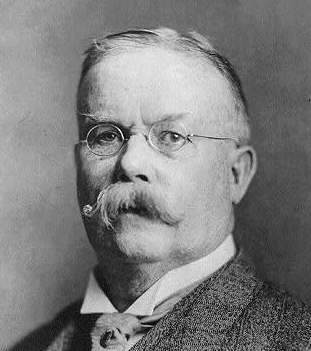
James McParland, 1907
McParland, by Riffenburgh’s account, makes an elusive subject for a biography. He boasted of accomplishments that seem not to have been his own, and he seems to have masterfully covered his tracks for anyone attempting to reconstruct his professional and personal life. A man of subterfuge in the pursuit of troublemakers and outlaws, he left little trace of himself in the way of reliably documented records. The result is an account of him that is to a great extent guesswork.

Readers with an interest in law enforcement in the historical West will find the latter half of this book informative. Here we find McParland joined by his most trusted operative, Charlie Siringo. Fearless as was his boss, Siringo was also adept at winning the confidence of labor organizers and thieves, to find his way inside targeted organizations and gather intelligence to be used against them in court—or less admirably, to be leaked to vigilantes.

We learn of the crime-ridden frontier of the 1890s, marked by waves of train and bank robberies. Riffenburgh devotes chapters to the outlaws who drifted in and out of Butch Cassidy’s gang as they repeatedly eluded capture, even gloried in their ability to rob and steal with impunity over a vast area of the West. We also meet Cassidy’s compatriot, Harry Longabaugh, better known as the Sundance Kid.

Charles Siringo
Caveats. The book’s subject and its title promise more than they deliver. Riffenburgh has done yeoman’s work in piecing together a factual record of McParland’s career, but a reader may be disappointed in the results of his efforts. They seldom add up to what should be a vivid portrait of the man. Dashiell Hammett seems to have had him in mind as the prototype of his fictional agency director, “the Old Man,” known to operatives as “Pontius Pilate, because he smiled pleasantly as he sent us out to be crucified.”

That characterization comes miles closer to capturing the man in words than Riffenburgh’s final admission that McParland “was, is, and forever will remain an enigma.” These two quotes side by side are the best argument for historical fiction over history. (Curious and curiouser, to find the source of that Hammett quote, you have to go to a website online to find the book’s footnotes.)

If you want a ripping suspenseful account of high-risk detective work, Riffenburgh’s book (despite its four pages of acknowledgments and the 5-star reviews at amazon) seems hardly to find much depth or excitement in its subject. Despite its title, it will be not “amazing” for readers looking for both history and a page-turner.

Wrapping up. A historian with a PhD in history from the University of Cambridge, Riffenburgh is described on the book’s dust jacket as the author of books on polar exploration, including Shackleton’s in the Antarctic. Pinkerton’s Great Detective is currently available in ebook, audio, and hardcover at amazon and Barnes&Noble.


Image credits: Wikimedia Commons

Coming up: Alan Ladd, The Proud Rebel (1958)


Sunday, May 4, 2014

Time marches on

First morning light
To the end of her life in her 90s, my aunt and godmother had a favorite phrase for anything that was news, welcome or otherwise: “Time marches on.” Usually said with a tone of bright if not grudging acceptance of life’s developments, it was an admission that time would always tell, and there was no predicting what it would have to say for itself.

Three months have passed since surgery, and with cancer, that’s a lot of water under the bridge. Still a month behind, I include below more excerpts from the journal I’ve been keeping since leaving the hospital.

3/25/14. Yesterday was a lesson too late for the learning. I am taking an antibiotic that comes with a warning: “Stay out of the sun unless you put on heavy-duty sun block. You’ll get a bad sunburn if you don’t.” Did I pay attention to that? Not nearly enough. On a day of bright sunshine, we went to a doctor’s appointment, and riding in the car, I may as well have been basking on the beach. In a few hours, I was turning beet red, and after some frantic calls for advice from someone at the Cancer Center, I was taking Benadryl and starting to reassume my usual color.

Saturday, May 3, 2014

Glossary of frontier fiction: R
(rack – rill)

Below is a list of mostly forgotten terms, people, and the occasional song, drawn from a reading of frontier fiction, 1880–1915. Each week a new list, progressing through the alphabet, “from A to Izzard.”


rack = to ride. “Well, you hitch up and rack out with part of the machinery, so you’ll have an alibi.” George W. Ogden, The Long Fight.

rackabone = an emaciated person or animal, a skeleton. “I was on my way to the store, but when I saw his old rack-a-bone team, I turned off to see you.” Hamlin Garland, The Moccasin Ranch.

racket store = a five- and ten-cent store. “What amused me most however, was an article written especially for one of the Megory papers by a keeper of a racket store and a known shouter for the town.” Oscar Micheaux, The Conquest.

rackets = snowshoes. “As the freezing nights hardened the crust upon the surface of the sodden snow, Jacques discarded his rackets.” James Hendryx, The Promise.

raffle = rubbish, debris. “The log walls hung with mackinaw garments, moccasins, and snowshoes, the water pail on the shelf beside the door, the bunks with their heavy gray blankets and bearskins—all the raffle that accumulates in a foreman’s winter quarters.” A. M. Chisholm, The Boss of Wind River.

Thursday, May 1, 2014

Richard Wheeler, Flint’s Truth (1998)


Number two in Richard Wheeler’s series of novels about frontier newspaper editor Sam Flint, this is an unusually dark tale for the author. There are moments of harsh realism in the first one, Flint’s Gift, but Wheeler creates a mining community in his second novel so merciless that readers can be tempted to lose faith in the West of honest men and deeds they turn to the western story to reaffirm.

Plot. It’s the summer of 1870, and itinerant editor Flint picks a New Mexico gold mining town, Oro Blanco, to set up shop. He quickly meets the man who will become his nemesis, the town marshal, Crawford. The marshal is not just the law. He is a brutal bully who uses his authority to physically dominate and punish anyone who crosses him.

He actually shows little respect for or understanding of law or what it has to do with law enforcement. He simply makes threats, cracks heads, and throws people in jail he doesn’t like. He is soon at loggerheads with Flint, who just wants to print the news.

Printing press, 1835
What Flint learns after arriving in town is that Mason Weed, superintendent of the Golconda Mining Company, has a lot to hide. Lawyers in the hire of the company are attempting to invalidate a land grant that would give full right of ownership of the land the town rests on to the Mexicans who have lived there for generations. It would also give them 25% interest in the output of the mines.

Weed, a polished man driven by insatiable greed, will do anything to prevent that. Flint quickly becomes a thorn in his side. But rather than condone Crawford’s high-handed use of force to put Flint out of business, Weed brings in a rival newspaper to print trash about him and his efforts to thwart Crawford and to bridge the distance between Mexican and Anglo residents of the town.

Caught in the middle is a 12-year-old girl, Libby, whose widowed mother is dying of consumption in a state of utter poverty and destitution. Libby is befriended first by Flint and then by a seven-foot Cornish miner, Mountain Jack Treat, who refuses to be intimidated by Crawford and his deputy thugs. Flint gives her a job at the newspaper, sending her to a street corner to sell copies of his weekly. Treat organizes a boycott of the mayor’s saloon and opens his own bar, patronized by loyal fellow miners.