Review and interview
This novel is a blend of crime fiction and western novel.
Set during the 1930s in Washington, it has a time frame that is both Old West
and New West. The “new” is there in the massive reclamation project, the
building of Grand Coulee Dam on the Columbia River. The “old” is a lingering
remnant of the frontier era, a time of savagery and lawlessness, where the most
savage and lawless were as likely to be white as red.
Some readers might call the novel an anti-western, since it
questions the mythology that preserves the memory of frontier lawmen. Getting
inside the mind of Russell Strawl, the novel’s central character, we are privy
to the thoughts of a former sheriff for whom law enforcement and criminality
turn out to be indistinguishable.
Told in the first chapter that Strawl in fact killed his
first wife in a sudden rage, we also learn that during his career as a lawman
he has taken the lives of fourteen men. So when there’s a series of grisly
murders on the reservation, we can’t be sure that Strawl himself isn’t the
killer he’s being paid to hunt down.
 |
| Site of Grand Coulee Dam, 1933 |
Not that there aren’t other suspects. Strawl’s adopted son
Elijah is a spooky, Bible-quoting Indian who seems to have sprung straight from
the heart of darkness. Another is an incestuous giant of a man who, though
congenial, strikes fear in those who know him.
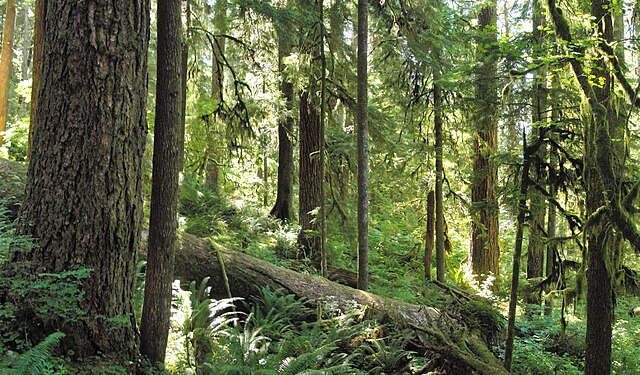
The wilderness setting in north-central Washington is a
sparsely populated land of austere beauty made hazardous by both man and beast.
Traveling on horseback across it, Strawl may as well be living in a previous
century.
It is a literary novel that may well have had Joseph Conrad
on its mind. For much of the way, we seem to be on the trail of Kurtz. The
novel’s reminders of how fact is transformed into myth find a parallel in the
stories that elevate the mad Kurtz into a hero. What it has to say about human
savagery may well evoke the word “horror.”
A particular pleasure in the novel is Holbert’s gift for
writing dialogue. Conversations are layered in degrees of irony, frankness
balanced against the evasive, responses made not always to what was just said
but what was unspoken. It’s a matching of wits between people who have long
used words as small-caliber ammunition.
Here is a sample from an exchange between Strawl and Elijah,
who has taken his half of Strawl’s ranch and sold it instead of continuing to
work it.
“You figure I squandered your
money,” Elijah said.
“Nope,” Strawl told him. “You
got more imagination than that.”
“Then why do you think I took it?”
“I have no idea,” Strawl said
“What if I told you?”
“Then I’d still have no idea,”
Strawl said.
This is not a book you can zip through, though the plot is
compelling enough to make you want to. Holbert wants you to see, feel, smell
the rough country and reservation land where the story takes its characters. He
will carefully describe the operation of a ferry that transports them across a
river. Riveting, if you have the stomach for it, is the description of the
mutilated remains of murder victims.
 |
| Bruce Holbert |
Interview
Bruce has generously agreed to spend some time at BITS today to talk
about writing and the writing of Lonesome Animals. It’s a pleasure to have him here, and I’m turning the
rest of this page over to him.
The novel draws on readers’ knowledge of both the western
and crime fiction. Who did you think of as your audience as you wrote?
I really don’t think in terms of audience, not because I
have some private erudite vision, but because I don’t usually know what’s going
to happen on the page until I write it. Often, as I’m putting things into words
I am discovering what I think about this or that, where the edges of my
characters are and what will happen next.
So I’m a long way from audience at that point. As the book
begins to take shape, I suppose I focus on being understood completely, which
requires a kind of clarity and precision with language that I think is one of
the highest considerations one can have for his or her audience.
How
would you define the “traditional western”?
I think the western is in constant transition. The Iliad was once a bunch of folk tales repeated around campfires
by Greek herdsmen for hundreds of years before Homer wove them together into a
masterpiece. They had time to ferment, gather subtleties and consistencies in
vision until they wove the kind of complete tapestry the Iliad is.
The western is still in the early stages of that process.
It grew from dime novels to adventure stories to morality tales with its own
tragic element, but it is far too young a story to be traditional. In fact, the
western seems to spend a lot of time responding against its own traditions.
Early John Wayne movies the Indians were the nemesis, by
the 50’s they were victims and business tycoons wore the dark hats. I’d like to
say this line of thinking is my own, but it is really fostered in a social
commentary on the west and violence called Gunfighter Nation, which is the finest book of its kind that I have
encountered concerning the West.
Do you think of any writers as having reinvented the
western before you?
I’m not sure I have reinvented anything, though it’s nice
of you to say so. I think I am responding to my own experience with the West,
which has been a mixed blessing. My grandfather was murdered by my great
grandfather in a manner that is similar to the end of Lonesome Animals.
My great grandfather was one of the first settlers of the
wheat country in the coulee and served a time as a policeman on the
reservation, all historic elements of the western ideal at one time. He also
left my father without a father or grandfather to guide him through his youth,
a loss that has been reflected in my life as well, because he had not model to
follow. My father is as decent a man as I know, and was a good father, but he
was an uneasy father, always doubting himself and that is part of the western
legacy as well.
As I said earlier, I think the western is constantly being
reinvented, the next western will respond to all those previous. It’s part of
why it remains a vital mythology.
How much research went into the writing of the novel?
Well, a lot in some regards. What I know of the country,
what I love and despair over concerning its people, that’s a life’s worth of
informal research, I suppose. I did have to spend a lot of time studying the
dam’s construction, though it was helpful my father and maternal grandfather
both spent much of their working lives on the project.
I also needed to get comfortable with the Thirties so I
read a number of local histories. I read Mourning Dove’s coyote stories, which
were an essential part in learning more about the native culture in that
country.
Are readers to assume that the central character in the
novel is closely similar to your great-grandfather?
Readers can assume so, if it pleases them. The fact is that
there are very few details available about my great grandfather’s life. He
became a sort of skeleton in the family closet and the details I do have, my
father has only revealed to me in the last dozen years or so.
He was a policeman on the reservation; he killed his
daughter’s husband in a cloudy conflict that may have been over the land they
co-farmed; he died in Monroe State Prison several months later. He lost a son
when my grandmother was young when the boy fell from a cliff while playing. The
rest of the events in the book and the character that evolved were the result
of my trying to put together how such a thing might have happened.
Did anything about the story or the characters surprise
you as you were writing?
Most everything surprised me, but that is my process. I
didn’t even know who the killer was until he practically admitted it on the
page, though it seemed natural enough when I looked back.