Friday, September 13, 2013

The show-not-tell of subtext


Annerocious over at her cheeky screenwriting blog recently posted a darn good explanation of subtext. It illustrates nicely, for any writer, how to “show not tell.”

She begins:

“Writers of spec screenplays often make the mistake of explaining things to readers, as if there is no other way of being understood.
Subtext is the opposite of that.
Since the easiest way to demonstrate this is to write two scenes, one with subtext and one without, that is what I did.
See if you can guess which one has subtext.” [Click here.]


Image credit: Wikimedia Commons

Coming up: Glossary of frontier fiction, B (blackman - boodle)

Thursday, September 12, 2013

Loren D. Estleman, This Old Bill (1984)


ebook edition
Estleman is a wonder. This novel based on the life of Buffalo Bill Cody, is an entertaining portrayal of a larger-than-life man who didn’t know the meaning of excess. Not a biography, the book is a series of scenes, often no more than snapshots. They start in 1854 with his boyhood, when Cody witnessed the murder of his abolitionist father in Kansas, and ends with his own death in Denver in 1917.

The novel teems with figures from frontier history: Wild Bill Hickok, Sitting Bull, George Armstrong Custer, Gen. Nelson Miles, and Texas Jack Omohundro. Queen Victoria, Theodore Roosevelt, and the Grand Duke Alexis of Russia make appearances. We also get to know the man’s long-suffering wife Louisa and their children, as well as his several business partners, who both used and abused his trust.

Estleman notes in an afterword that accuracy in a book about Cody is no easy task. With the help of Ned Buntline, the press, and Cody’s own fevered imagination, any record of his life was sure to be highly colored—when not wildly exaggerated. Print the legend was the general rule.

William "Buffalo Bill" Cody
While Estleman claims to have hewed more or less closely to known facts, he admits to taking a few modest liberties of his own. One of them is to strike a consistently comic point of view. Always wry, droll, and ironic, this is a story as Mark Twain would have told it.

Narrative style. Portraying the frontier West as a world that scorned temperance and moderation, Estleman marshals language to achieve a similar effect. His sentences are crowded with sharply precise verbs and adjectives. Words almost tumble over each other.

Big Isaac Cody, whiskered like a border raider, with the build of a canal-boat puller and the eyes of a boy on his first visit to a Leavenworth whorehouse, rested a horned hand on his eight-year-old son’s shoulder and watched Kansas bleed.

That’s the first sentence of chapter one, and its careening storytelling style, overflowing with metaphor, sets the tone for the whole novel.

Abrupt scene-to-scene shifts catapult the reader forward in skips and jumps. Often a scene is well underway as it begins. We don’t know where we are or what’s going on until paragraphs later, and then only by paying attention to the dialogue.

And the dialogue itself is typically facetious and understated. Leading a rescue party to find lost cavalry troops in the dead of winter, Cody comes upon a starving and near-frozen Hickok trying to warm his hands at a buffalo chip fire. There follows this exchange:

“What you doing, Wild Bill?”

“Well,” drawled the other,  “when they got hot enough I was fixing to eat my fingers. But yours are fatter.” 

In the rough and tumble narrative flow, extraneous details compete with description of the central action of a scene—as when a cavalry officer orders his troops to attack an Indian camp and the bugler “disremembers” how to sound the charge.

Historical characters make entrances under their birth names, and their identity isn’t discovered until pages later. A man named Jim turns out to be Hickok, and a sharpshooter, Mrs. Phoebe Butler, is eventually revealed as Annie Oakley.

Wednesday, September 11, 2013

Gary J. Cook, A Murder of Wolves


Here’s another book that came over the transom at BITS, not the usual fare here, but its Montana writer more or less dared me to read it. It’s a hard one for me, a western reader, to categorize—call it a political thriller set in the modern-day West. But there’s a good deal more going on between its covers.

Plot.  The novel has three plots. One is the slow and suspenseful unfolding of the other two, a plot and a counterplot involving federal law enforcement and domestic terrorists. By slow I don’t mean it ever flags, at least not for long. It’s structured like a mystery, so that mysterious events transpire and it’s not clear who the villains are or what they are up to. Like the traditional western or spy novel, it’s also a kill or be killed world, with the added factor that characters have ready access to the weaponry of modern-day combat.

The telling of the story itself has many parallels with current Hollywood action-adventure fare. The central characters are a pair of sheriff’s deputies, both highly trained veterans of the war in Afghanistan. Their scenes together are a nonstop flow of banter, as in a buddy movie, even as bullets fly. A set piece in the middle of the novel is a car chase along a busy highway.

The novel even comes with its own product placement (Mountain Dew, Starbucks, Pilates) and a soundtrack. Here’s a song playing on a truck stereo in one scene:


Characters. J. L. “Barney” Lambier and Joe Big Snake Person are the deputies, assigned to an anti-terrorist task force based in Missoula. They report to a hard-nosed FBI agent, Quinn McBride, who scolds them like an older sister barely tolerating the antics of two ungovernable brothers.

Joe Big, a Force Recon marine, is a mixed-blood Blackfeet who is ambivalent about his Indian heritage and just wants to be an “American.” A loner and not a joiner, he has no wish to be a member of the tribe and rejects its exalted mythology, but he admires an uncle whose stealth and mysterious power seem super-human.

Barney, who was trained to the Army Special Forces, is a Southerner, whose wife has just left him. A man obsessively devoted to the pursuit of bad guys, he seems not to miss her or even remember her, which says enough about how that marriage fell apart. His bringing home an STD acquired “in the line of duty” was for her the last straw.

Tuesday, September 10, 2013

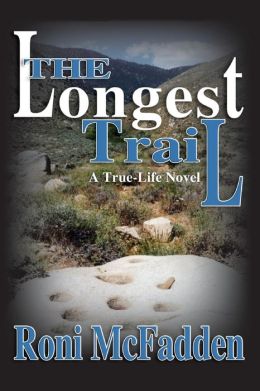
Roni McFadden, The Longest Trail


I didn’t think I was going to like this book, and then it kind of grew on me. It calls itself “a true life novel,” but it seems more precisely a memoir. Author McFadden tells of a few key years as a teenager in the 1960s. With a rocky home life and school days full of misery, she has only a love of horses to keep her from taking more dark turns than her life has already taken.

A friendly stable owner and horse trainer befriends her, and before long she is accompanying him as he packs groups of hunters into the Sierras in eastern California. Learning how to pack horses, set up camp, and cook for them, she acquires the self-confidence and independence to pass through a difficult adolescence.

We get to know some of the horses she is responsible for, each with his or her own personality and temperament. And we learn that hunters are rarely good at even finding game to shoot. Drinking and playing cards are more their idea of enjoying the woods, and she has little respect for them.

There is the occasional crisis as when four horses disappear into the night, frightened by something so terrifying that it takes days of searching to find them. Spending time alone at the base camp, three miles off the highway, she is faced with having to put down one of the horses with a broken leg. Another horse nearly dies of snakebite, but her swift thinking keeps the animal alive.

California Sierras, 1972
She herself becomes aware of the long history of former Native American inhabitants of the area and begins to feel that spirits of them are watching over her. She has both waking and sleeping dreams about them. The vividness of these dreams is the only suggestion of fictionalizing in the book.

This is not a tell-all memoir. Her relationship with John, her mentor, for all his importance to her, is not given much depth. A romance with an older boy is only implied. The many young friends who congregate off-season at the base camp are simply names, only one of them emerging from obscurity by reason of all the practical jokes played on him.

Readers interested in the life of high-altitude trail packers should also look for Willard Wyman’s High Country (reviewed here a while ago). The Longest Trail is currently available at amazon and Barnes&Noble and for kindle and the nook.

Image credit: Wikimedia Commons

Coming up: Gary J. Cook, A Murder of Wolves

Monday, September 9, 2013

How (not) to write a book review


I came across the following at goodreads and have borrowed it to say a few things about reviewing books:

This book has everything you need to make a historical novel suck. And not just moderate, forgivable sucking, but full-on golf ball through a garden hose suckage. Painstaking, ubiquitous research that adds nothing; language so stilted it topples off the page; unbelievable characters doing ludicrous things, but doing them -- importantly -- in period costume; overwrought British-accent narrative musings stretching to find some justifying meaning in the assinine [sic] shit-chimp plot. Also, a glowing cover blurb from Annie Proulx. What the fuck? My mind rejects it as true non-sense.

I grant a reader the right to be angered and repelled by a book. But this diatribe puts me in mind of a quote attributed to Kurt Vonnegut that writer Thomas Rizzo recently posted on Facebook:

“Any reviewer who expresses rage and loathing for a novel is preposterous. He or she is like a person who has put on full armor and attacked a hot fudge sundae.”

Vonnegut rarely said anything without irony, but I think his point here is that a full-scale assault on a novel quickly becomes overkill. And if you extend the analogy, he seems to be saying that a novel is no more than a defenseless confection anyway. What’s the big deal?

For me, the main purpose of a review is to give a reader enough information to predict whether a book will hold his or her interest. What else besides that do we expect from a book? The writer of the review above doesn’t do that. All I know is that he or she thinks the book sucks and then complains about it in a way that doesn’t help me as a reader at all.

Here are some points the reviewer might have considered:

Plot. Safe to say, most readers of fiction read for plot. It’s possible to sum up the plot of a novel in 10-25 words. It’s often enough to simply state the premise:

It’s 1876 and two aging Texas Rangers take a herd of cattle on a perilous trek across Indian Territory to points north.

Beyond that, a summary of the plot needs no more than what a reader requires to understand the rest of the discussion of the book. Meanwhile, most readers don’t like spoilers, so I try not to give away too much. Surprises should remain surprises.

A review can say that a novel ends happily without spoiling anything, if how it does that is left unexplained. A dramatic turn of plot can also reveal something of the content of a story without being over-specific. For example:

A life-and-death crisis develops as a confrontation with a band of hostile Indians leaves one man mortally wounded and another wandering alone and on foot across the trackless prairie.

It's tricky knowing where to draw the line, but I find reviews sometimes that are blow-by-blow synopses of a plot. The writers, I think, are confusing plot summary with something like a Reader's Digest condensed version of the novel. That's not the job of a review either.

Saturday, September 7, 2013

Glossary of frontier fiction: B
(beat - blackleg)


Below is a list of mostly forgotten terms, people, and the occasional song, drawn from a reading of frontier fiction, 1880-1915. Each week a new list, progressing through the alphabet, “from A to Izzard.”

beat = an outstanding person or thing. “Ma, did ye ever see the beat? ’N’ a saw-hoss ’n’ a axe, ’n’—’n’ everything!” Frederick Thickstun Clark, In the Valley of Havilah.

beat the cars = to surpass in every way. “And her paw—though Lord knows who her maw was—a-dressing her to beat the cars.” Harry Leon Wilson, The Lions of the Lord.

beau catcher = a small flat curl of hair worn on the temple. “My mother was making a company for me, putting up my waterfall and curling my beau-catchers.” Harry Leon Wilson, The Lions of the Lord.

beauty for ashes = biblical reference to Isaiah 61:3, “To appoint unto them that mourn in Zion, to give unto them beauty for ashes.” “Crowding down from the hills into luxuriant masses by the banks of the stream was a gay riot of wild flowers of every hue, as though, for this brief carnival time of summer, Nature had been minded to give beauty for ashes with mad prodigality.” Mary Etta Stickney, Brown of Lost River.

bedstaff = a wooden pin on the sides of the bedstead to hold the bedclothes from slipping on either side. “I put two and two together in the twinkling of a bedstaff.” Francis Lynde, The Grafters.

beef = to knock someone down; to slaughter, kill. “I beefed him under the ear, and we took his guns away, sir.” Frederic Remington, John Ermine of the Yellowstone.

beer jerker = a drunkard. “You-all kin gamble yer alce all bets would be off with them painted dancehall beer jerkers.” Edgar Beecher Bronson, The Red-Blooded.

Belle Mahone, cover
“Belle Mahone” = sentimental ballad by J. H. McNaughton, published 1867. “I dreamt I was dressed up beautiful in a ruffled gown ’n’ hoops ’n’ was a stan’in’ on a platform singin’ Sweet Belle Mahone like a bird in a tree.” Frederick Thickstun Clark, In the Valley of Havilah.

“Belle of Mohawk Vale, The” = a song from c1860 by G. W. Elliott and J. R. Thomas, popular among Confederate soldiers during the Civil War. “When Macie sung, it was The Mohawk Vale ev’ry time.” Eleanor Gates, Alec Lloyd, Cowpuncher.


“Ben Bolt” = a traditional song based on a poem written by Thomas Dunn English in 1848, set to music by Nelson Kneass in 1848. “She contributed her quota by singing ‘Annie Laurie’ and ‘Ben Bolt.’” Jack London, A Daughter of the Snows.


Benighted Harry
benedict = a newly married man, especially one who has been long a confirmed bachelor; from the character in Shakespeare’s Much Ado About Nothing. “Your prediction sounds a bit strong from one who is himself a benedict.” Will Lillibridge, Ben Blair.

Benighted Harry = the boy in “Harry and the Guidepost,” a poem in McGuffey’s Third Reader. “Being thoroughly frightened, I walked right over to their camp to show them that I was not,—making by this movement the same cold bluff that Benighted Harry made on the friendly guide-post.” Cy Warman, Frontier Stories.

Besom
besom = a broom made of twigs tied around a stick. “The Indians would undoubtedly line the banks with riflemen and the island would be swept by bullets as with a besom without delay.” Cyrus Townsend Brady, The West Wind.

Friday, September 6, 2013

Horace Annesley Vachell, Bunch Grass (1912)


This collection of stories set among ranches and homesteads in Southern California was the early work of an English writer who became a prominent novelist and London playwright. Born into wealth and privilege, Horace Annesley Vachell (1861-1955) emigrated to California in 1883, where he operated a cattle ranch with his father-in-law. These 20 stories, published over a decade after his return in 1900, draw humorously and thoughtfully on that experience.

Character. Of strength of character, the stories demonstrate a frontier tenacity of spirit. As Vachell notes in his Foreword:

The virtues that counted in the foothills during the eighties were generosity, courage, and that amazing power of recuperation which enables a man to begin life again and again, undaunted by the bludgeonings of misfortune.

The unnamed narrator of the stories and his younger brother, nicknamed Ajax, are rarely touched by genuine adversity. While they discover that cattle ranching scarcely pays the bills, they have the advantage of owning a former land grant with grass and water enough in the good years. For the homesteaders who venture onto the poorer, dryer land, survival is a tenuous struggle.

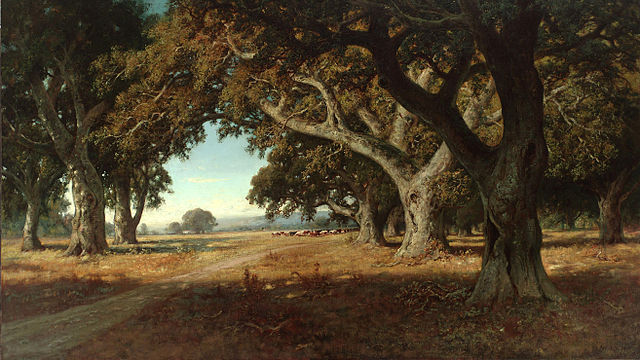
William Keith, California Ranch, 1908
For their part, the brothers don’t always exercise good judgment in a story. Ajax sometimes meddles in the lives of other characters with unexpected results. With no more knowledge of women than can be gained from a “profound study of high literature,” he plays matchmaker for a bashful bachelor. Discovering too late that the bride-to-be expects her groom to take the temperance pledge, Ajax has to invent a scheme to break the engagement without risking a breach of contract suit.

One of the best stories in the collection is surely “One Who Died,” about two English remittance men. It illustrates how the West absorbed men who came there as outcasts from homes far away. Gentlemen they may be, but they lack character. Free to continue living indolently, they are an embarrassment only to themselves.

Reinventing themselves at will, the two men in this story fake the death of one of them to collect funeral expenses from the family back in England. With the money, they buy a saloon and become prosperous. All goes well until the father of the “dead” man comes to California to visit his son’s grave. From beginning to end, the story makes for a memorable moral tale.

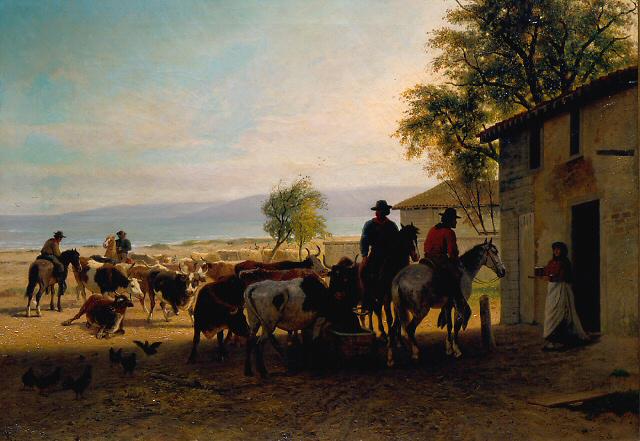
William Hahn, Ranch Scene, Monterey, California, 1875
Women. In the opening story, “Aletha-Belle,” the young woman of the title is a book agent, selling a sentimental volume door-to-door about motherhood, called The Milk of Human Kindness. Given the kind of salesmanship required of her line of work, she is expected to have “the hide of a rhinoceros, the guile of a serpent, the obstinacy of a mule, and the persuasive notes of a nightingale.” But she turns out to be a “thin, slab-chested figure” with a “prim New England accent,” who looks no more then 18.